The rapid rise of GLP-1 receptor agonists—commonly prescribed for type 2 diabetes and significant weight management—has added another tool for optimising metabolic health. These medications offer profound metabolic benefits, improving glycaemic control and facilitating substantial weight loss for millions of people. In many countries, GLP-1 agonists are fast becoming the most prescribed drug.
However, as their use becomes widespread, it is important to look closely at how these systemic changes intersect with specific organ systems. As a Hepato-Pancreato-Biliary (HPB) surgeon, I am not anti-GLP-1; these drugs are powerful and valuable tools. But with high usage comes a clinical responsibility to understand the specific hepatobiliary and pancreatic side effects that can occasionally emerge.
The Pancreatic Link: Understanding Acute Pancreatitis
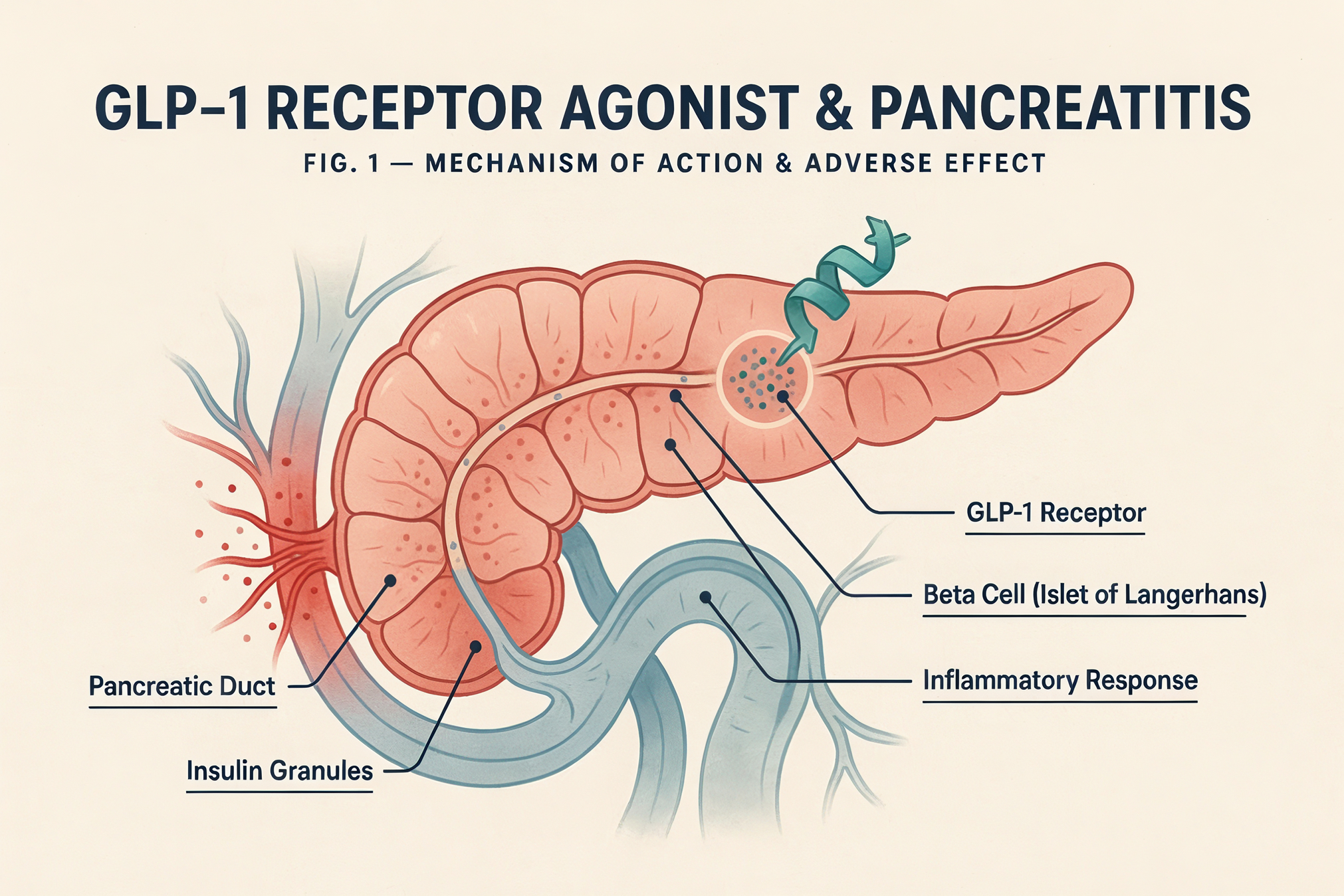
One of the most frequently discussed safety signals associated with GLP-1 receptor agonists involves the pancreas. Because these medications act on receptors within the gastrointestinal tract and pancreas, questions regarding inflammation have been studied closely since the drugs’ introduction.
- The Mechanism: GLP-1 receptor stimulation can influence pancreatic exocrine function and ductal secretion. While large-scale clinical trials have generally shown a low absolute risk, post-marketing surveillance and registry data indicate a small, statistically significant increase in the incidence of acute pancreatitis compared to alternative therapies.
- What to Watch For: For patients taking these medications, persistent, severe abdominal pain that radiates to the back—often accompanied by nausea and vomiting—should never be ignored. It warrants immediate medical evaluation to rule out acute pancreatic inflammation.
The Biliary Tree: Gallstones and Motility Changes
The second major area of intersection with HPB surgery involves the biliary tree—specifically, the formation of gallstones (cholelithiasis), functional stasis, and subsequent gallbladder disease.
Interestingly, some of these biliary issues are a byproduct of the drug’s greatest benefit: rapid weight loss.
- Bile Stasis and Supersaturation: When individuals lose weight very quickly—whether via pharmacotherapy or bariatric surgery—the body metabolizes mobilized fat stores, leading to an increased secretion of cholesterol into the bile. Simultaneously, rapid weight loss decreases gallbladder motility and emptying.
- Functional Dyskinesia: Beyond physical stone formation, GLP-1 receptor activation can alter smooth muscle activity throughout the gastrointestinal and biliary tracts. This can lead to sluggish gallbladder emptying (functional stasis) even before stones formally crystallize, occasionally triggering biliary colic or right upper quadrant discomfort that mimics structural disease.
The Liver Counterbalance: A Major Step Forward
It is equally important to highlight the positive side of the ledger for the liver. While we watch for rare complications, the broader context in modern HPB and metabolic care is that these drugs are profoundly hepatoprotective for a massive segment of our patient population.
By driving weight loss and improving metabolic profiles, GLP-1 agonists are currently leading a paradigm shift in the treatment of Metabolic dysfunction-Associated Steatotic Liver Disease (MASLD) and its more progressive inflammatory form, MASH. For many patients, these medications significantly reduce hepatic fat content and liver inflammation, offering substantial long-term protection against chronic liver disease progression.
A Balanced Perspective
None of these risks mean that GLP-1 agonists are unsafe or should be avoided. For the vast majority of patients, the metabolic, cardiovascular, and hepatic benefits far outweigh these potential risks.
Instead, it is a matter of awareness and proactive management:
- For Patients: Be aware of your body. Report persistent, severe abdominal pain promptly. Understanding that rapid weight and motility changes affect your digestive system helps you seek care early if symptoms arise.
- For Clinicians: As we manage patients on these therapies, maintaining a high index of suspicion for biliary colic, cholecystitis, or pancreatitis ensures that complications are caught before they escalate into surgical emergencies.
GLP-1 agonists are reshaping healthcare for the better, but like any powerful medical tool, understanding their secondary effects ensures we can maximize their benefits while protecting our patients’ long-term health.