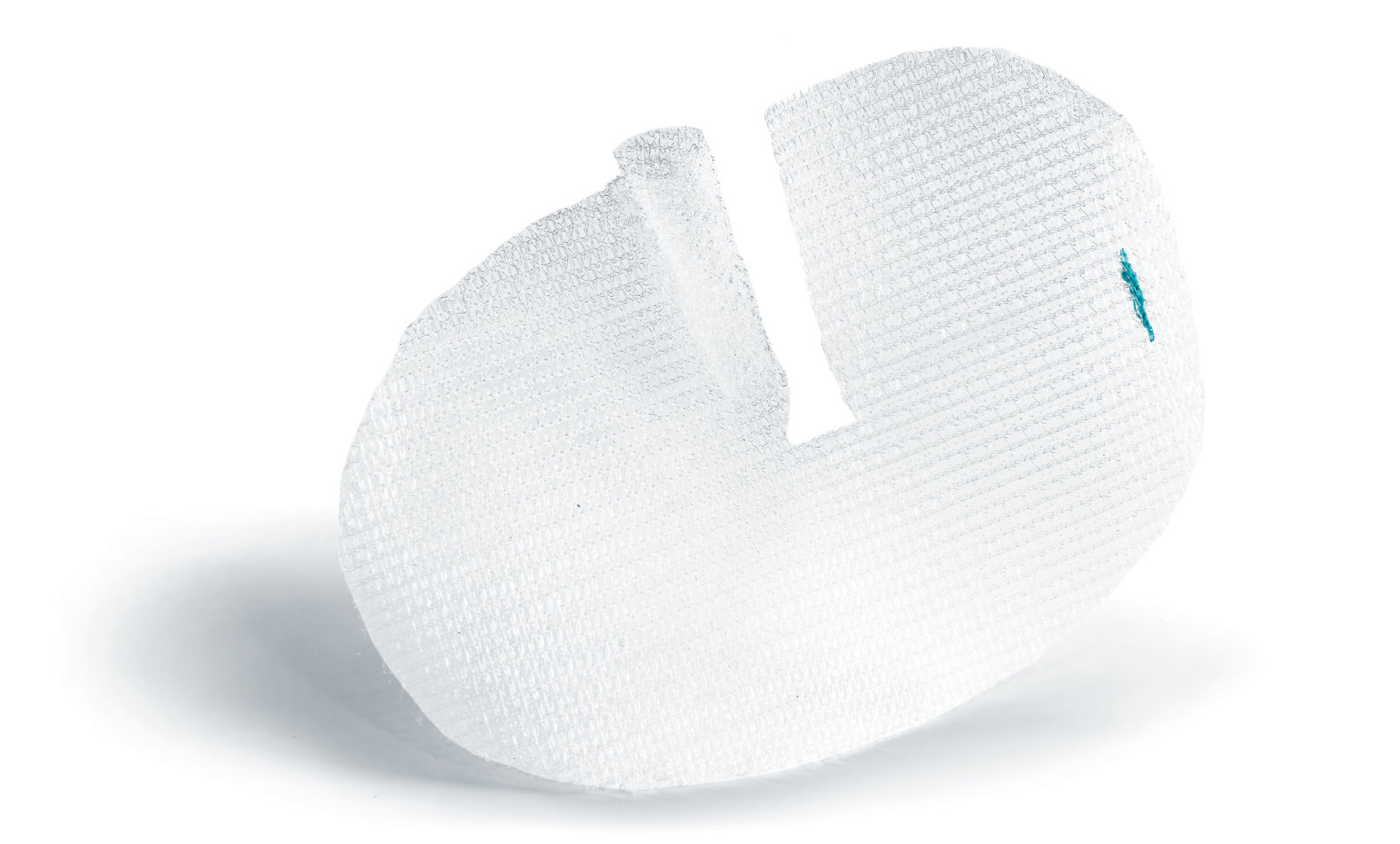
As an experienced hernia surgeon, one of the most important decisions I make during your laparoscopic inguinal hernia repair is selecting the appropriate surgical mesh. The mesh acts as a scaffold to reinforce the weakened abdominal wall, helping to prevent the hernia from returning.
Mesh Material and Weight
Mesh is typically made from a synthetic polymer, most commonly polypropylene. The key difference lies in the weight and pore size.
- Heavyweight Mesh: Uses more material, offering very strong reinforcement. However, it can sometimes feel stiffer and may cause more long-term inflammation or discomfort in some patients.
- Lightweight Mesh: Uses less material and has larger pores. This design allows for better integration with your body’s tissue and may result in a softer, more flexible scar plate, potentially leading to less chronic pain. I generally prefer a lightweight mesh whenever appropriate.
Fixation: Tacks vs. Self-Adhesive
In laparoscopic (keyhole) surgery, the mesh is placed inside the abdominal wall and must be secured to prevent it from moving, which is called fixation.
Traditionally, this required the use of surgical tacks—small, metallic or absorbable devices stapled into the tissue. While effective, tacks can sometimes be a source of post-operative pain or discomfort.
The Advantage of Self-Adhesive Mesh (e.g., ProGrip)
An exciting advancement is the use of self-adhesive mesh, such as the ProGrip system*. This innovative mesh has thousands of tiny, micro-grips on its surface. When it is positioned against your tissue, these grips engage and hold the mesh securely in place without the need for surgical tacks along the main fixation points.
- Reduced Risk of Nerve Injury: By eliminating the need for extensive tacking, we significantly reduce the risk of irritating or injuring the nerves in the area, which is a major benefit in minimizing post-operative discomfort and chronic pain.
- Faster Procedure: The self-adhesive nature allows for quicker mesh placement and fixation resulting in less time under anaesthetic
- Lower risk of recurrence: Since the mesh is adhesive all over, it reduces the risk of a hernia sneaking around the mesh. When non-adhesive mesh is used, tacks can’t be placed on all sides thus increasing the risk that a hernia can work its way around the flap that’s unsecured.
My choice of mesh for you is always based on the size and type of your hernia, your overall health, and my goal to achieve the strongest repair with the least amount of post-operative discomfort.
*I have no relationship, financial or otherwise, with the manufacturers of this or any other mesh product.