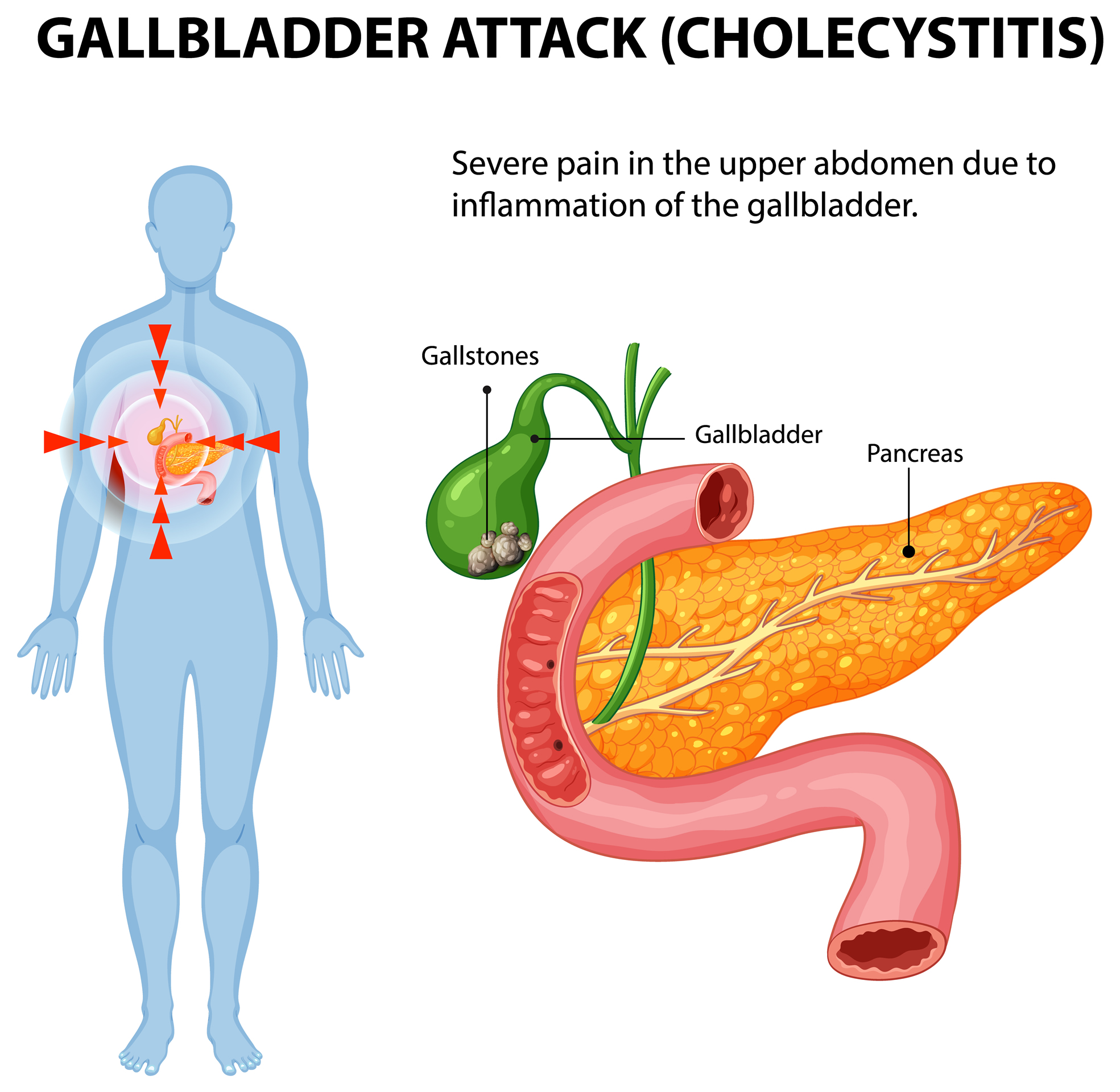
As an HPB (Hepato-Pancreato-Biliary) surgeon, I often meet patients who are surprised when they are told that they need gallbladder surgery (laparoscopic cholecystectomy). They haven’t had the classic “gallbladder attack” or severe inflammation like cholecystitis. Yet, they have experienced a serious secondary complication like pancreatitis or stones found in the common bile duct (CBD).
If you are in this position, you might wonder: “If I don’t have pain, why do I need surgery?”
The answer lies in the difference between a “noisy” gallbladder and a “dangerous” one. Here is why laparoscopic cholecystectomy (keyhole surgery) is the necessary next step for your long-term health.
- Your Gallbladder is the “Source”
Even if the gallbladder itself isn’t painful, it is the factory producing the stones that caused your recent complication.
- Recurrence Risk: Once a stone has escaped and caused a problem like pancreatitis, the chance of it happening again is very high.
- The Next One Could Be Worse: A second episode of gallstone pancreatitis can be much more severe, potentially leading to life-threatening organ failure and permanent pancreatic damage.
- Preventing Silent but Serious Damage
Stones in the common bile duct (choledocholithiasis) can cause “silent” problems that you might not feel until they become emergencies:
- Cholangitis: This is a severe infection of the bile ducts that can lead to sepsis (a body-wide infection).
- Jaundice: A blockage can cause bile to back up into your bloodstream, turning your skin and eyes yellow.
- Liver Scarring: Long-term, untreated duct blockages can lead to permanent liver damage known as secondary biliary cirrhosis.
- Why Surgery Now is Safer
Choosing to have surgery electively—or during your initial hospital stay—is safer than waiting for an emergency.
- Easier Procedure: Removing the gallbladder when it isn’t acutely inflamed is technically “cleaner” for the surgeon, reducing the risk of complications or the need to switch to a large “open” incision.
- Faster Recovery: Laparoscopic surgery typically involves just a one-night stay and a return to normal activity within 1–2 weeks.
- Better Outcomes: Proactive surgery significantly reduces the risk of future hospital readmissions and the need for more complex procedures like ERCP to clear blocked ducts.
Summary of Benefits
- Eliminates the Source: Stops new stones from forming and migrating.
- Prevents Life-Threatening Attacks: Drastically lowers the risk of recurrent pancreatitis/ cholangitis.
- Minimally Invasive: Uses small incisions, leading to less pain and faster healing.
The goal of treatment isn’t just to stop pain; it’s to prevent a future medical crisis. If you’ve had a “warning shot” from a CBD stone or pancreatitis, removing the gallbladder is the definitive way to protect your health.